

Slovenia on the UN Security Council: two years of responsible, visible and principled engagement
During its two-year term, Slovenia has proven…
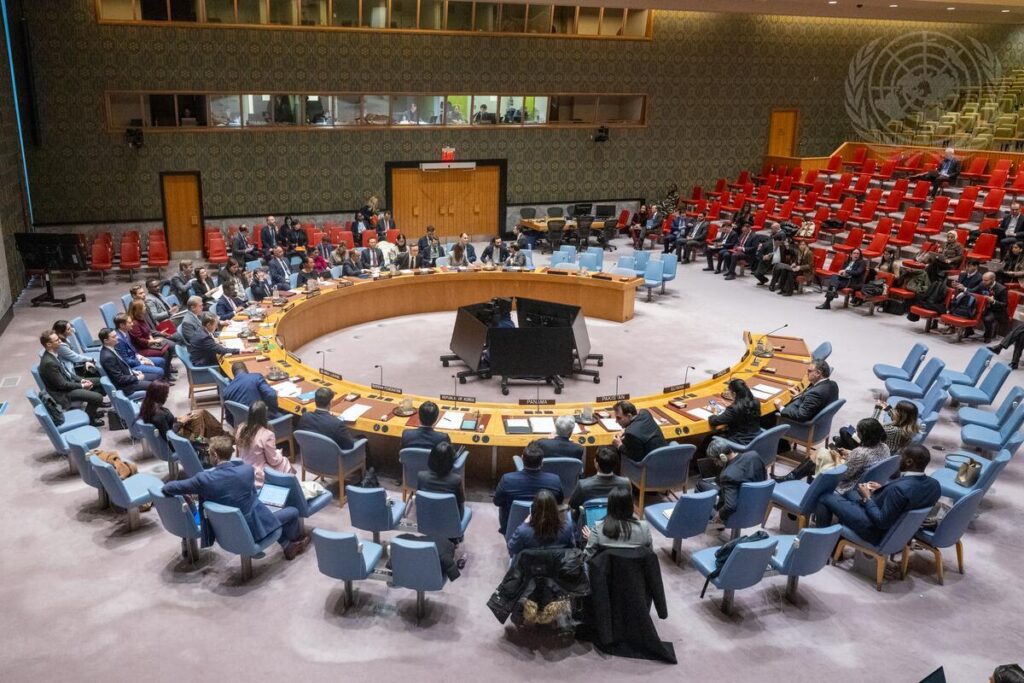
In its final month as a member of the UN Security Council, Slovenia held the Presidency for the second time. The Presidency featured the Council’s historic visit to Syria and Lebanon as well as a signature open debate on Leadership for Peace. Core activities included the adoption of a presidential statement on Bosnia and Herzegovina, marking 30 years since the Dayton Peace Agreement. Slovenia also organised three special meetings on Sudan, which continues to face an extraordinary humanitarian crisis. These concerns were further underscored through a press stakeout initiated by Slovenia, drawing attention to the severe challenges faced by women and girls in the country.
First week of December
At the first Security Council meeting under Slovenia’s Presidency, members turned their attention to the situation in Iraq, as the United Nations Assistance Mission for Iraq (UNAMI) prepares to conclude its mandate at the end of the year. Slovenia in its national capacity emphasised that UNAMI has played a vital role in Iraq’s progress toward peace. Council members also noted that as the Mission phases out, it leaves behind a more stable and peaceful country.
From 3 to 6 December, members of the Security Council visited Syria and Lebanon. In a historic first-ever visit to Syria, the delegation sought to build trust while demonstrating the international community’s support and solidarity with the Syrian people. The visit came at a pivotal moment for the region, as Syria continues its transition one year after the fall of the Assad regime.
In Syria, the delegation met with the transitional authorities, including President Ahmed al-Sharaa, Foreign Minister Asaad al-Shaibani, and other cabinet members. They also met with the UN team in Damascus, representatives of Syrian civil society, religious leaders, and communities affected by violence earlier this year.
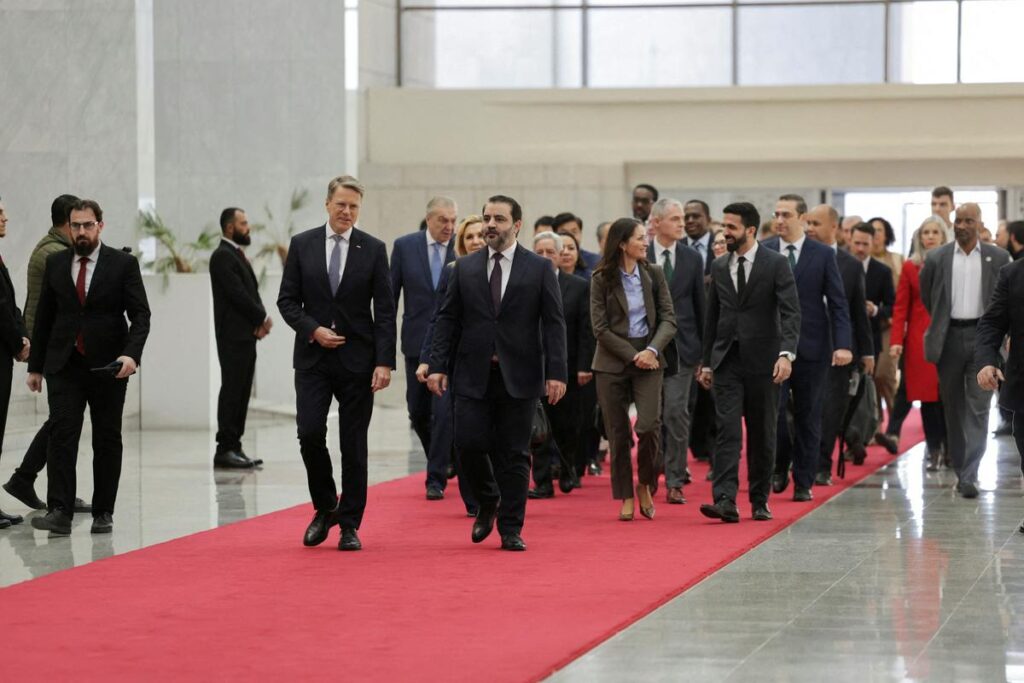
In Damascus, Ambassador Samuel Žbogar underlined the international community’s commitment to supporting and helping all Syrians in building a better future. “The path to a better future will be Syrian-led and Syrian-owned,” he said. He also highlighted the UN’s strong presence in the country and its ability to assist Syrians.
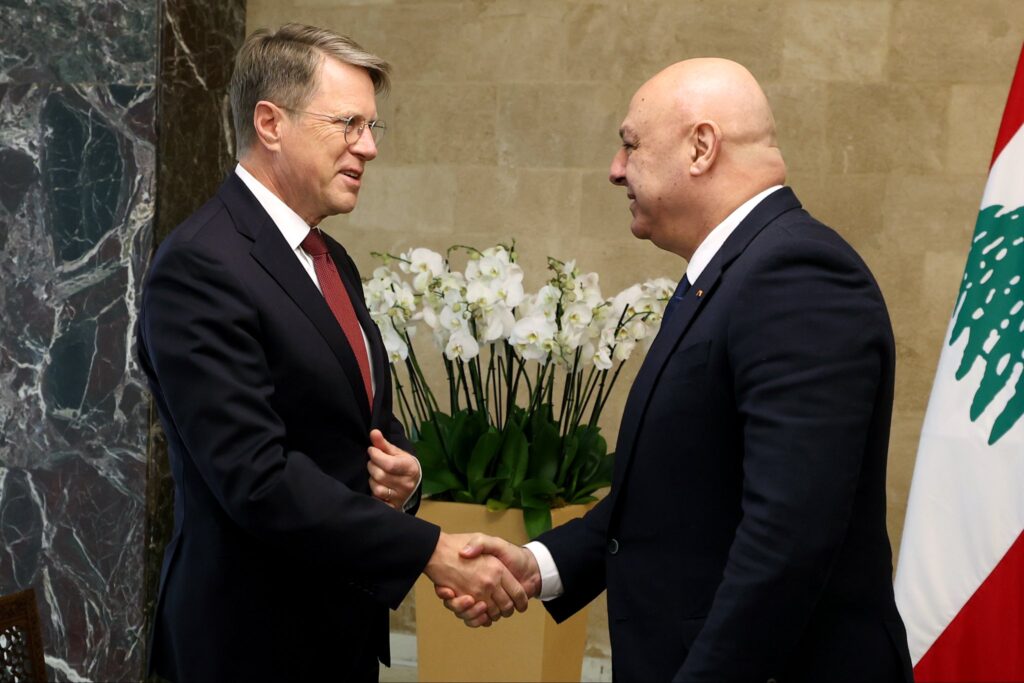
In Lebanon, the delegation reaffirmed the Council’s support for the country’s territorial integrity, sovereignty and political independence. The full implementation of Security Council Resolution 1701 remains essential, as does upholding the year-old Cessation of Hostilities Agreement between Israel and Hezbollah.
During the two-day visit, the delegation met with President Joseph Aoun, Speaker of Parliament Nabih Berri, Prime Minister Nawaf Salam and Foreign Minister Youssef Rajji. It also received briefings from the Lebanese Armed Forces Commander, the UNIFIL Force Commander, UN staff in Lebanon and the US General heading the Cessation of Hostilities mechanism. The delegation also toured the southern Lebanon border and UNIFIL compounds.
Second week of December
In the second week of December, Deputy Prime Minister and Minister of Foreign and European Affairs Tanja Fajon visited New York, where she chaired three Security Council meetings. At the briefing on UN–OSCE cooperation, the Minister underscored that both organisations share the same fundamental principles, and that the OSCE continues to deliver essential contributions to European security.
Addressing the latest developments in Ukraine, Foreign Minister Fajon condemned Russia’s escalation of the war, particularly in the wake of ongoing peace negotiations. She called on Council members to speak against blatant violations of the UN Charter and international law. “This war needs to end. As a first step, both sides should urgently agree to a full and unconditional ceasefire,” she stated, noting that meaningful peace negotiations can only begin once the fighting stops. The Minister reiterated that a just and lasting peace for Ukraine must be firmly rooted in the UN Charter and shaped by Ukraine.
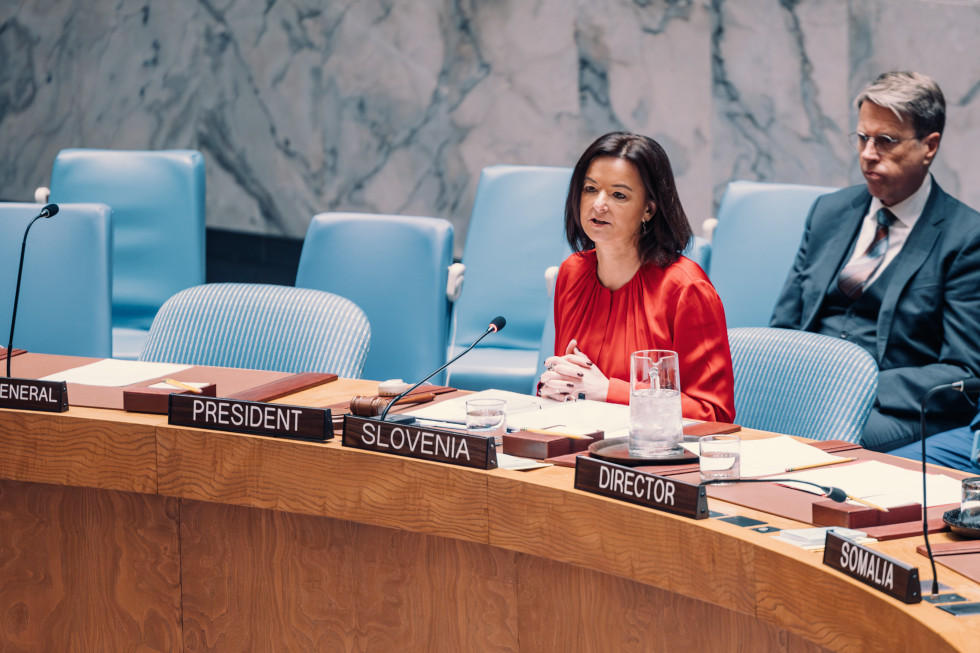
In a display of Slovenia’s commitment to the people of Afghanistan, Minister Fajon chaired, for the second time in two years, the meeting on the situation in the country. The Minister called on the Taliban to immediately lift all policies and restrictions that violate human rights. In particular the rights of women and girls, including bans on Afghan women working for and entering UN premises. “We will continue to call for the full, equal, meaningful and safe participation of women and girls in all spheres of public life; for their right to education, healthcare and employment; and for their freedom of movement, expression and assembly,” she said, emphasising that UNAMA’s mandate remains crucial for documenting and reporting human rights violations.
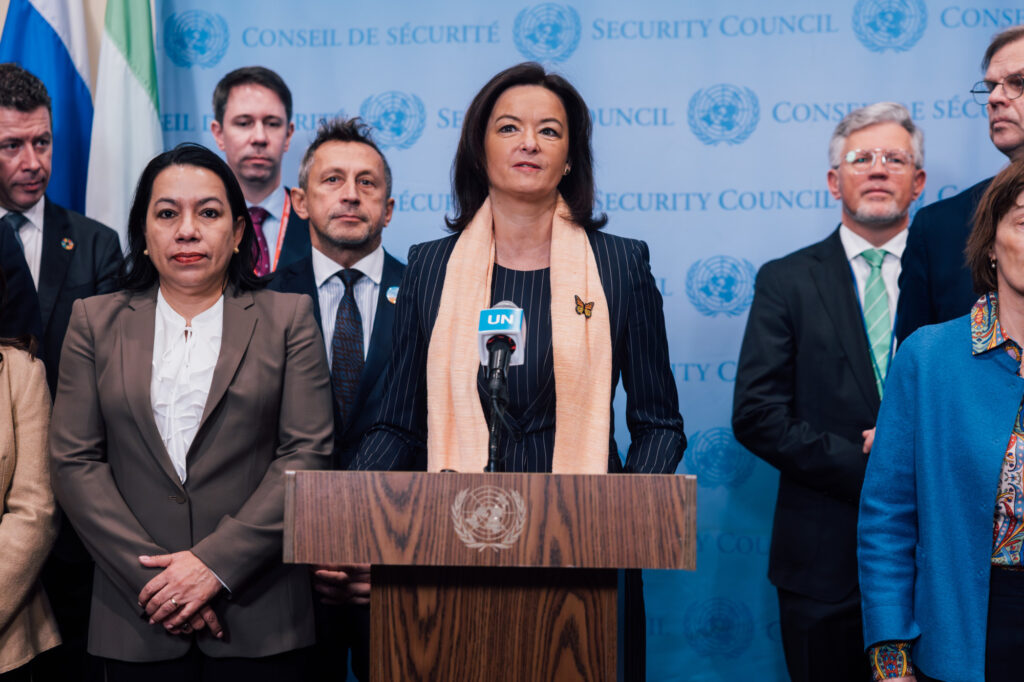
Ahead of the meeting, which took place symbolically on Human Rights Day, the Minister delivered a joint statement on behalf of 54 UN Member States and the EU, reaffirming that every human being in Afghanistan, and elsewhere, is entitled to all universal human rights without discrimination. Protection of human rights remains a prerequisite for peace and security.
To mark the tenth anniversary of landmark Security Council resolution 2250 on Youth, Peace and Security, Slovenia convened the Security Council and the Peacebuilding Commission for an interactive dialogue. This event marked the first step in implementing the recently adopted resolution on the UN Peacebuilding Architecture Review. We believe that young people hold transformative power in peace processes: they do not merely contribute to peace, they help shape and sustain it.
Third and fourth week of December
At its signature event, the open debate on Leadership for Peace on 15 December, Slovenia invited all UN Member States to share their views on empowering the UN and on the qualities essential for the next Secretary-General. In the debate, which saw participation from 80 UN members, Ambassador Žbogar noted that the role demands a complex balance of functions. “We expect the Secretary-General to be a peacemaker, a guardian of the UN Charter, a manager and a moral authority,” he stated, noting that in its 80-year history, the UN has never had a woman leader, a gap that must be addressed. Recognising that no candidate can succeed alone, Žbogar called for an “alliance for peace” to provide the institutional support necessary for effective leadership.
At Slovenia’s final Security Council meeting on the question of Palestinian, Ambassador Žbogar called on all parties to fully implement the Gaza ceasefire. Much more needs to be done to strengthen the fragile ceasefire and build a better future for Palestinians. Slovenia firmly believes in the two-state solution, with Israelis and Palestinians living side by side in peace and security.
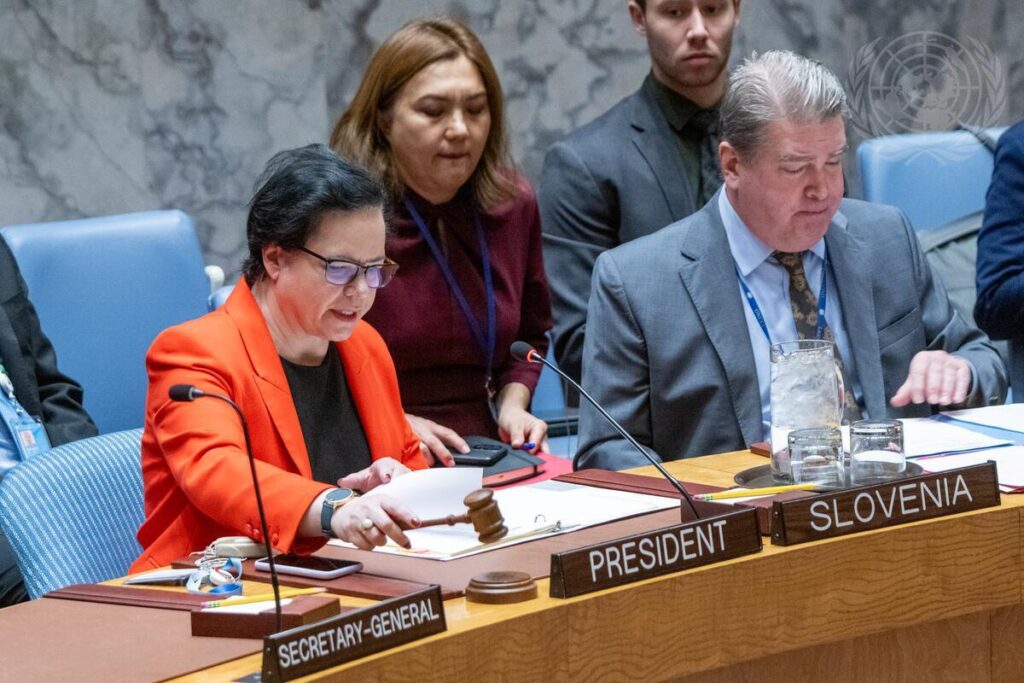
In December, the Security Council held an unprecedented three meetings dedicated to the grave humanitarian situation in Sudan. At all three meetings, Slovenia once again condemned, in the strongest possible terms, the horrific violence against civilians and called on both warring parties to end the bloodshed. “The war in Sudan has crossed every moral, legal and human boundary. Civilians are killed, besieged, starved, bombed, raped and displaced,” Ambassador Žbogar stressed, emphasising the deliberate and systematic nature of the harm. Slovenia underlined the need for accountability and urged all external actors to halt the transfer of arms and cease any form of logistical or financial assistance that prolongs the conflict.
At the urgent meeting addressing the situation in Venezuela, Slovenia called on all relevant Member States to de-escalate tensions in the interest of regional security. Žbogar stressed that respect for international law is critical and that there is no military solution to any dispute. Equally important is respect for human rights in Venezuela.
On 29 December, Slovenia presented a Presidential Statement on Bosnia and Herzegovina, marking the 30th anniversary of the Dayton Peace Agreement. Through the statement, the Security Council reaffirmed its unwavering commitment to the sovereignty, territorial integrity and political independence of Bosnia and Herzegovina. It also reiterated that the shared goal remains a stable, democratic and sovereign state with full responsibility for its political and economic processes. Any transition of the international presence must occur in full accordance with the Dayton Peace Agreement.
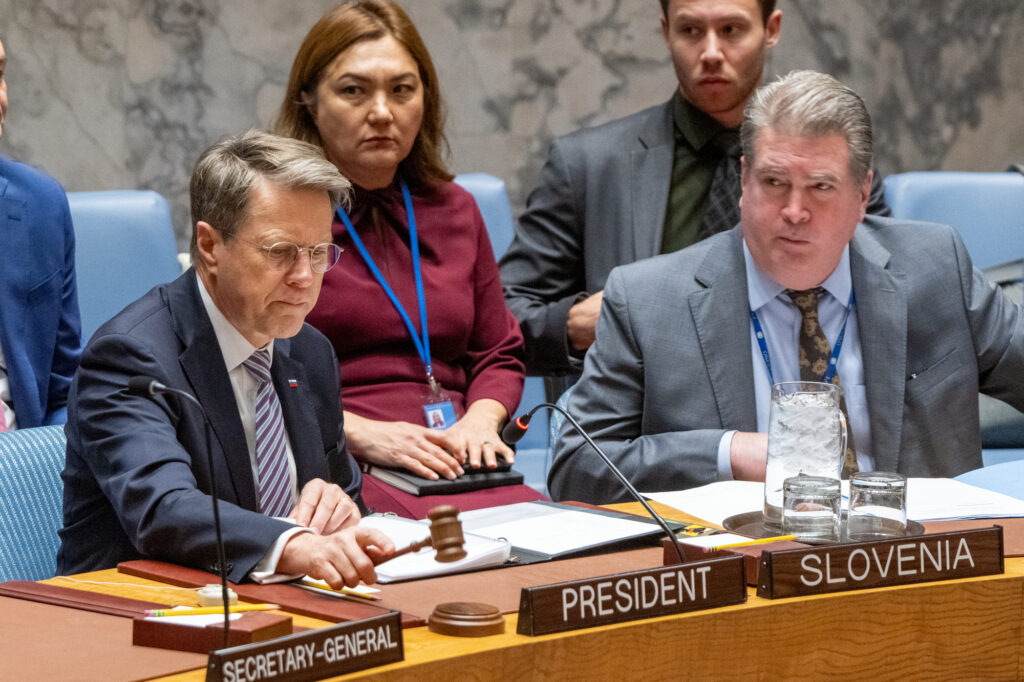
At the final Security Council meeting under Slovenia’s Presidency—an urgent briefing on Somaliland—Slovenia expressed deep concern over actions taken against Somalia at the end of December. Such actions undermine Somalia’s sovereignty and territorial integrity and risk further destabilizing the region. Slovenia also firmly rejected any false equivalencies between the independence of Palestine and Somaliland.
Adoptions and press stakeouts
In addition to the joint press encounters on the situation of women and girls in Sudan and the one delivered by Minister Fajon on Human Rights Day, Slovenia also organised a press encounter by the Joint Pledgers on Climate, Peace and Security on West Africa and the Sahel.
In December, the Security Council unanimously adopted a resolution on Youth, Peace and Security, as well as resolutions renewing MONUSCO’s mandate in the DRC, the UNDOF Mission in the Golan Heights and the mandate of the Counter-Terrorism Executive Directorate.The Council also renewed both sanctions against Al-Shabaab and the mandate of the peacekeeping mission in Somalia (AUSSOM), and released press statements on Yemen and on drone attacks against UNISFA peacekeepers in Abyei.
During its two-year term, Slovenia has proven…
In December 2025, during its Presidency of the UN Security Council…
Today, at Slovenia’s initiative, the Security Council adopted…