

Slovenia on the UN Security Council: two years of responsible, visible and principled engagement
During its two-year term, Slovenia has proven…
The Informal Expert Group of members of the UN Security Council on Climate, Peace and Security (IEG CPS) conducted a six-day informal field mission to Chad from 7 to 12 December 2025. This second field visit, following the one to Nigeria in 2024, focused on the multidimensional and context-specific climate, peace and security challenges in the Lake Chad Basin and Eastern Chad.
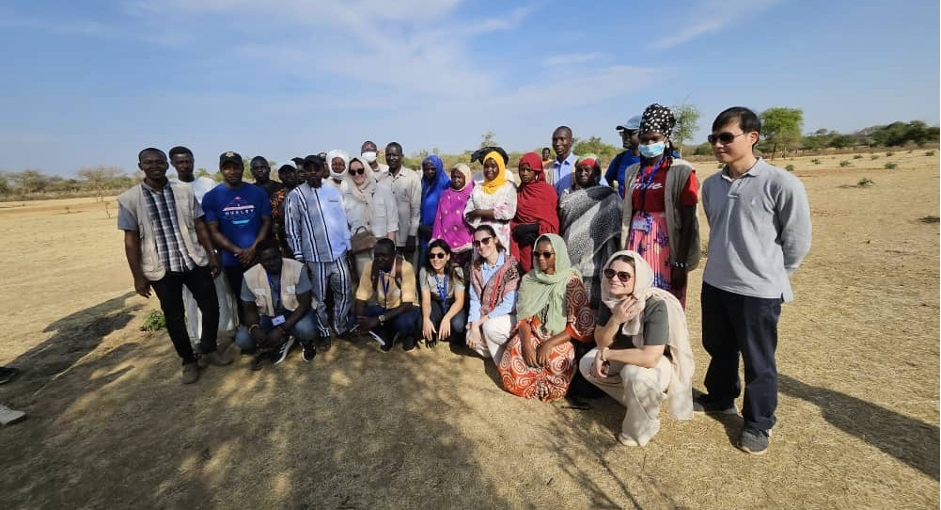
The delegation, led by Slovenia, co-led by Guyana and the Republic of Korea, and joined by Denmark, France, Greece, Sierra Leone and the United Kingdom, held meetings with a wide range of stakeholders. These included representatives of government and local authorities, regional organizations such as the Lake Chad Basin Commission and the Multinational Joint Task Force, United Nations entities, as well as women and youth leaders, traditional leaders and civil society organizations.
While acknowledging the immense challenges faced by Chad and the wider region, the delegation emphasized the importance of climate- and conflict-sensitive solutions, programming and financing. The visit reaffirmed the commitment of the members of the Security Council to addressing climate-related security risks in fragile contexts and to translating international commitments into tangible local impact, while reinforcing solidarity with vulnerable populations.
Overall, the mission underscored the urgency of addressing climate change as a driver and multiplier of conflict and insecurity in the Lake Chad Basin, Eastern Chad and the wider Sahel. At the same time, it highlighted opportunities for regional cooperation, innovative approaches and community-led initiatives to strengthen resilience and sustain peace. Continued engagement with local actors, governments and international partners remains essential to addressing the interconnected challenges of climate change, conflict and peacebuilding.
“What we witnessed in Chad underscores the need to integrate climate considerations into peacebuilding and security responses. Climate-sensitive solutions are essential to prevent tensions from escalating into conflict.” – Ms. Sabina Carli Sitar, Mission’s Lead, Permanent Mission of Slovenia to the United Nations.
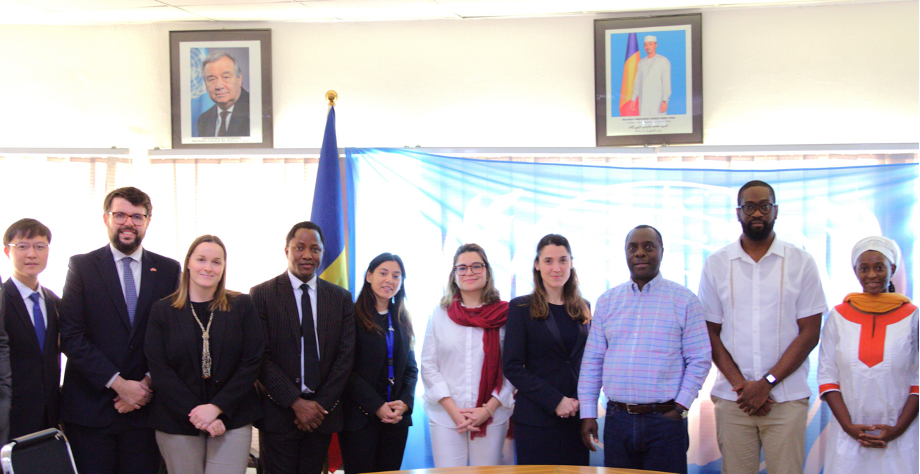
High-Level Engagements on the Frontlines of Climate, Peace and Security
The delegation met with the Secretary General at Chad’s Ministry of Foreign Affairs, Chadians Abroad and International Cooperation, Mr. Djangbeye Guelngar Evariste, as well as representatives of state institutions working on climate, peace and security. Discussions focused on the highly localized impacts of climate change and conflict across Chad and their differentiated security implications.
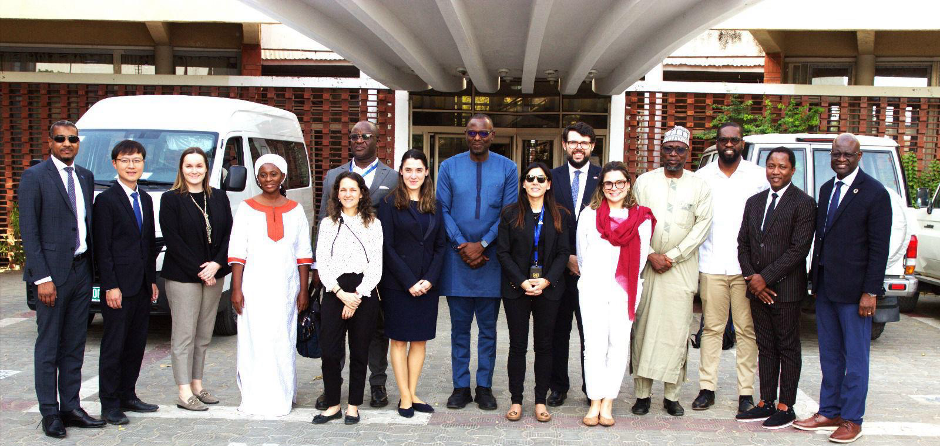
In meetings with the UN Resident and Humanitarian Coordinator, Dr. François Xavier Batalingaya, and representatives of UN agencies, funds and programmes operating in the Lake Chad Basin, the delegation was briefed on UN-led efforts, in partnership with the Government, to address root causes of instability and climate-related security risks.
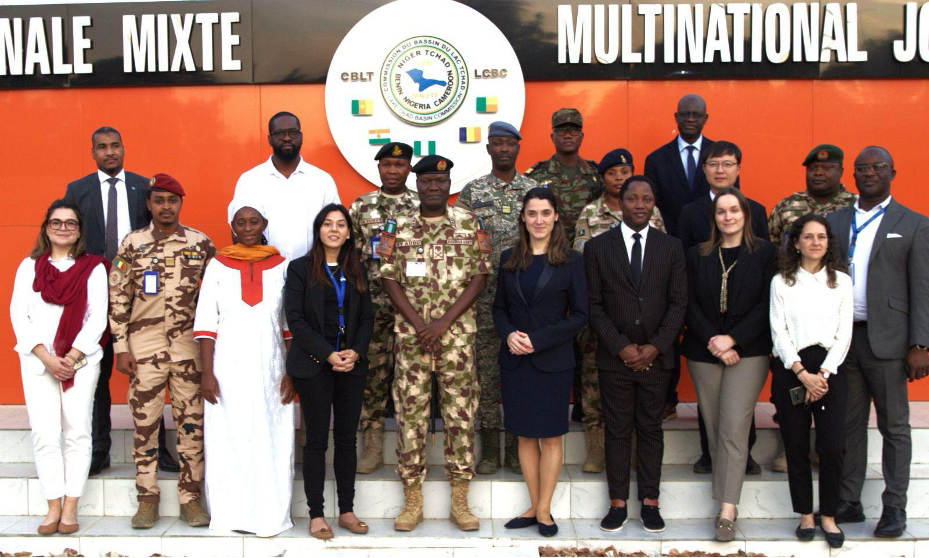
A roundtable discussion with the Technical Director of the Lake Chad Basin Commission, Mr. Hycinth Banseka, highlighted the importance of transboundary water management and ongoing stabilization, recovery and resilience efforts in Boko Haram–affected areas. The delegation also engaged with the Force Commander of the Multinational Joint Task Force, Major General Saidu Audu, who provided insights into both kinetic and non-kinetic operations adapting to an evolving climate context.
Local Voices at the Heart of Climate, Peace and Security
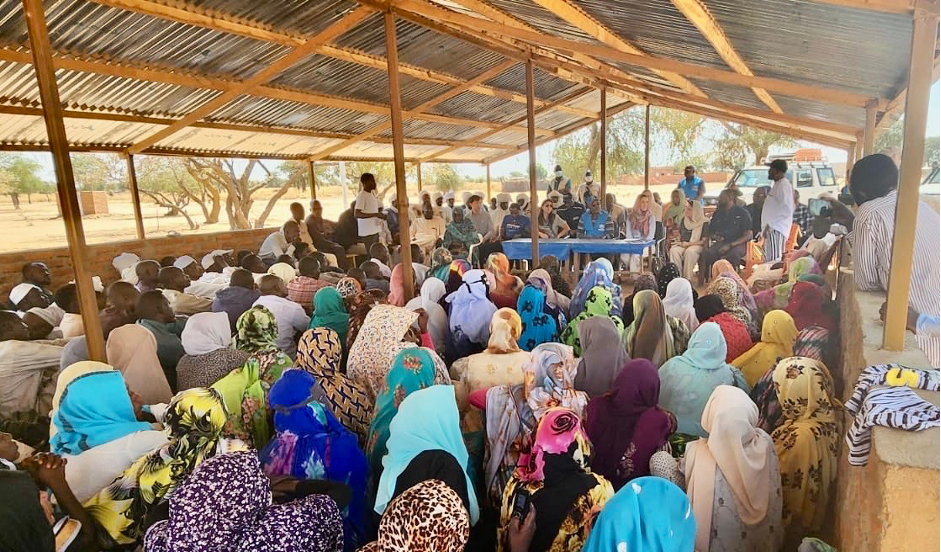
The delegation further engaged with local civil society organizations working on climate resilience, transhumance, prevention of farmer–herder conflicts, mediation and peacebuilding at sub-national, national and regional levels. These exchanges underscored the central role of locally led, conflict-sensitive solutions, with women, youth and traditional leaders playing a key role in mediation, peacebuilding and community-level conflict resolution.
Across all engagements, stakeholders consistently emphasized the importance of education and vocational training for youth and women as a foundation for sustainable livelihoods and as a preventive measure against recruitment by criminal and armed groups.
“Communities across the Lake Chad Basin are on the frontlines of the climate crisis. Strengthening resilience, especially for women and youth, is central to sustaining peace and preventing future instability.” – Mr. Royston Alkins, Mission’s Co-Lead, Permanent Mission of Guyana to the United Nations.
Seeing Climate Impacts First-Hand: Eastern Chad
A three-day field visit to Goz Beida in Sila Province provided first-hand exposure to the localized impacts of climate change on peace and security in Eastern Chad. The delegation met with the Government Delegate of Sila Province, Mr. Sadick Siboro Dinga, the Provincial Action Committee, and the Mayor of Goz Beida, Mr. Abdelmadjid Hassan Abbo. Discussions focused on the simultaneous pressures of displacement and climate stress, rising intercommunal tensions, competition over natural resources between and among refugee and host communities.
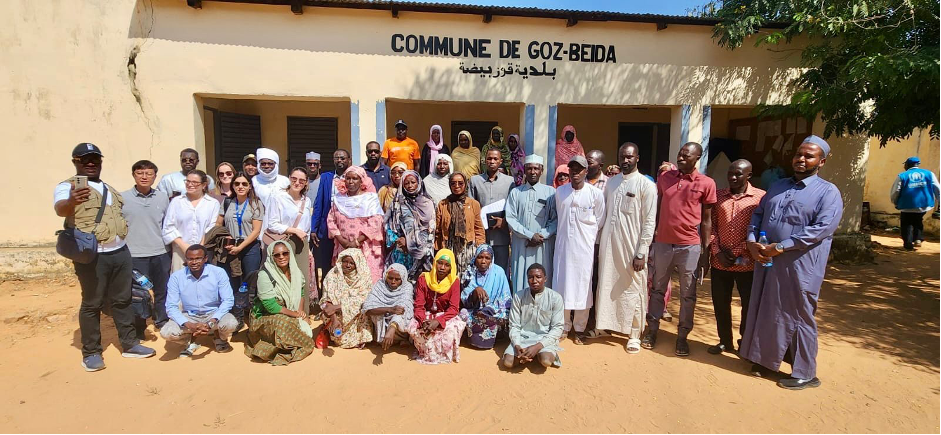
The delegation also visited Zabout refugee camp, hosting over 50,000 refugees fleeing the conflict in neighbouring Sudan. Participants observed acute humanitarian needs and the compounding effects of climate change, including food insecurity, water scarcity and infrastructure deficits. Visits to pilot resilience initiatives, including clean cooking solutions, reforestation, communal orchards and women-led entrepreneurship markets, demonstrated approaches promoting joint refugee–host community inclusion.
A Region Under Pressure: Climate, Forced Displacement and Fragility
The mission took place amid growing concern over the destabilizing effects of climate change on security and development. Increasing exposure to floods, droughts and desertification – combined with political instability, armed conflict in neighbouring countries, humanitarian pressures and violent extremism – has made the region one of the most fragile in the world.
In Eastern Chad in particular, mounting climate shocks, large-scale displacement and intercommunal tensions over natural resources are placing severe strain on communities and institutions. Since April 2023, the arrival of more than 1.4 million refugees, internally displaced persons and returnees, mainly from neighbouring Sudan, and to a lesser extent from the Central African Republic and Libya, has exacerbated pressure on already scarce resources, heightened social tensions and weakened governance capacities, threatening to reverse peacebuilding and development gains.
“Effective responses to climate-related security risks must link humanitarian action, development and peacebuilding. Investing early in resilience and inclusive governance saves lives and reduces long-term instability.” – Mr. Myong Hwan Kim, Mission’s Co-Lead, Permanent Mission of the Republic of Korea to the United Nations
From Observation to Action: Purpose and Partnerships
The purpose of the mission was to observe the localized impacts of climate change on peace and security and their implications for stabilization, humanitarian action, mediation, peacebuilding and sustainable development. It also aimed to take stock of recommendations emerging from the work of the United Nations, regional organizations and national authorities, applying a context-specific approach to the Lake Chad Basin and Eastern Chad.
The mission also highlighted the breadth of partnerships supporting climate-sensitive peacebuilding in Chad, including cooperation with the Lake Chad Basin Commission on transboundary natural resource management and pastoral mobility, joint initiatives with the Peacebuilding Fund (PBC), Global Environment Facility (GEF), UN Development Programme UN Food and Agriculture Organization, World Food Programme, UN High Commissioner for Refugees and UN Office for the Coordination of Humanitarian Affairs (OCHA) linking humanitarian response with long-term resilience, and partnerships with the World Bank and African Development Bank supporting climate-resilient infrastructure and financing. Participants also received a briefing on the Great Green Wall Initiative, highlighting its role in addressing climate-related drivers of conflict in line with the Climate, Peace, and Security agenda.
The mission demonstrated how the UN system, through UNOCA, UNOWAS, DPPA/CSAD/CAT, the Climate Security Mechanism at the UN (CSM) and the UN Resident Coordinator’s Office in Chad, together with regional partners such as the Lake Chad Basin Commission, has scaled up engagement on climate-related peace and security risks. Participants also benefited from a presentation on “Climate, Peace and Security Initiative in Eastern Chad” by UNOCA’s Climate, Peace and Security Advisor conducted under the Climate Security Mechanism.
The mission was accompanied by the Climate, Peace and Security Advisor of the United Nations Regional Office for Central Africa (UNOCA), Dr. Mabaye Dia; the Climate, Peace and Security Advisor of the United Nations Regional Office for West Africa and the Sahel (UNOWAS), Ms. Tanya Merceron; the Programme Advisor on Climate Security Risks at UNDP Chad, Mr. Elvis Paul Nfor Tangem; the Peace and Development Advisor in the UN Resident Coordinator’s Office, Mr. Mohamed Ag Alhousseini, together with Ms. Judith Knöpfli and Mr. Emmanuel Bureau Morgode; and Ms. Laura de Wulf, Associate Political Affairs Officer at the Central Africa Team, Departments of Political and Peacebuilding Affairs and Peace Operations (DPPA–DPO).
During its two-year term, Slovenia has proven…
In its final month as a member of the UN Security Council, Slovenia held the Presidency…
In December 2025, during its Presidency of the UN Security Council…